
Where your kit comes from

Every piece of an AtaalaPrana kit is sourced and made in India, the country where yoga, meditation and the study of energy began. This page explains why that matters, and then follows the kit through four stages: sourcing, making, consecration and packing.

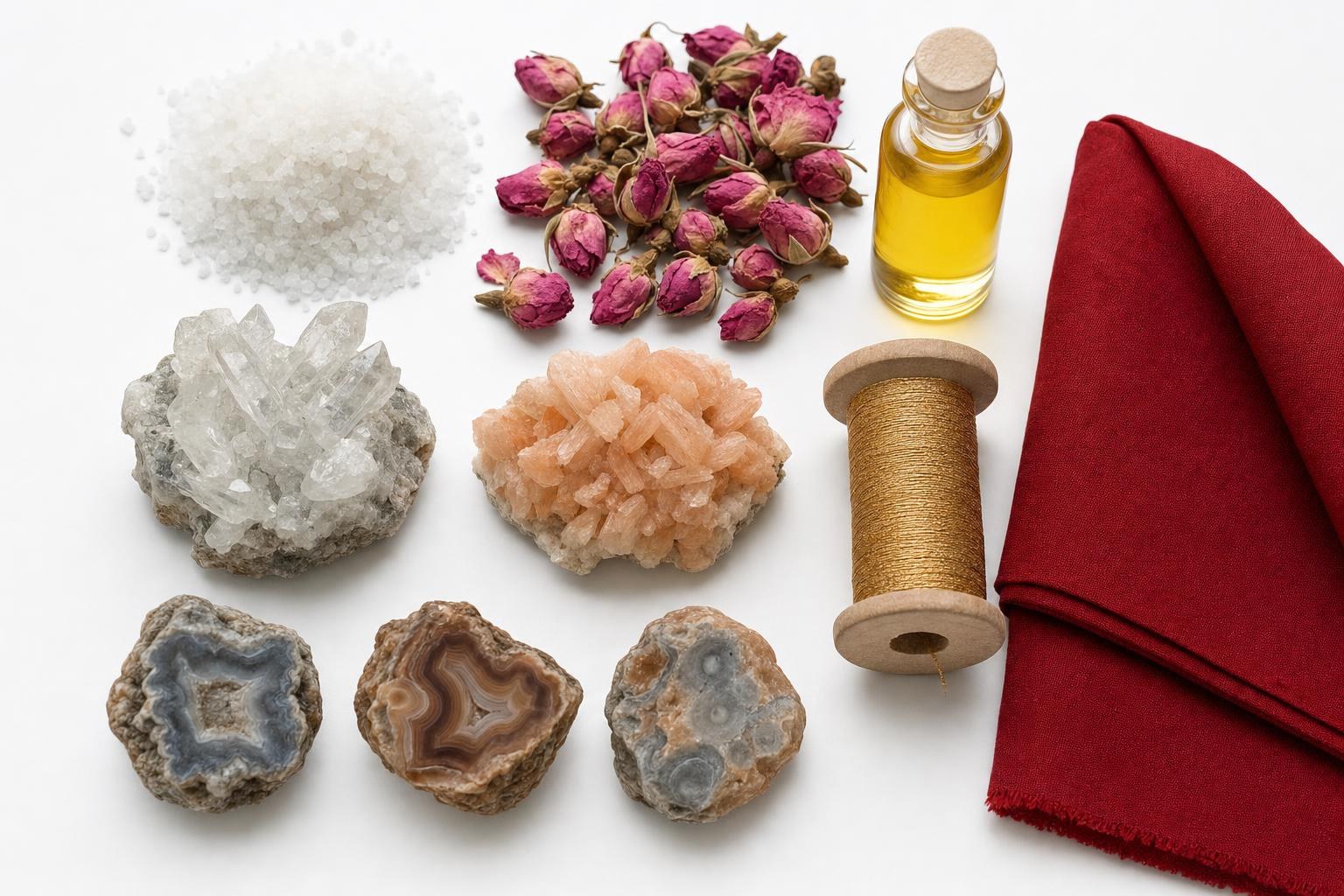
Raw materials laid out on white: lake salt, dried rose buds, a vial of oil, raw crystals, agate nodules, a spool of gold thread and folded red cloth.
Everything a kit is made from: lake salt, damask rose, rose oil, Deccan crystals, Khambhat agate, gold thread and red cloth.

India is the home of this practice

Yoga, meditation and the study of prana, the Sanskrit word for life energy, began in India. They were taught and written down there more than two thousand years ago, and people still travel to India from all over the world to learn them at their source.

We make our kits in India for that reason. The knowledge behind the practice, the materials in the box and the crafts that shape them all come from the same place.

The source
Indian texts that are more than two thousand years old describe how to sit, how to breathe and how to meditate.
The language
Prana, chakra and asana are Sanskrit words from India, and the whole world now uses them.
The crafts
Indian weavers, stone cutters and distillers have handed their skills down through families for centuries.
A person in white sits in meditation on stone steps beside the Ganges at dawn, seen from behind, with misty hills beyond.
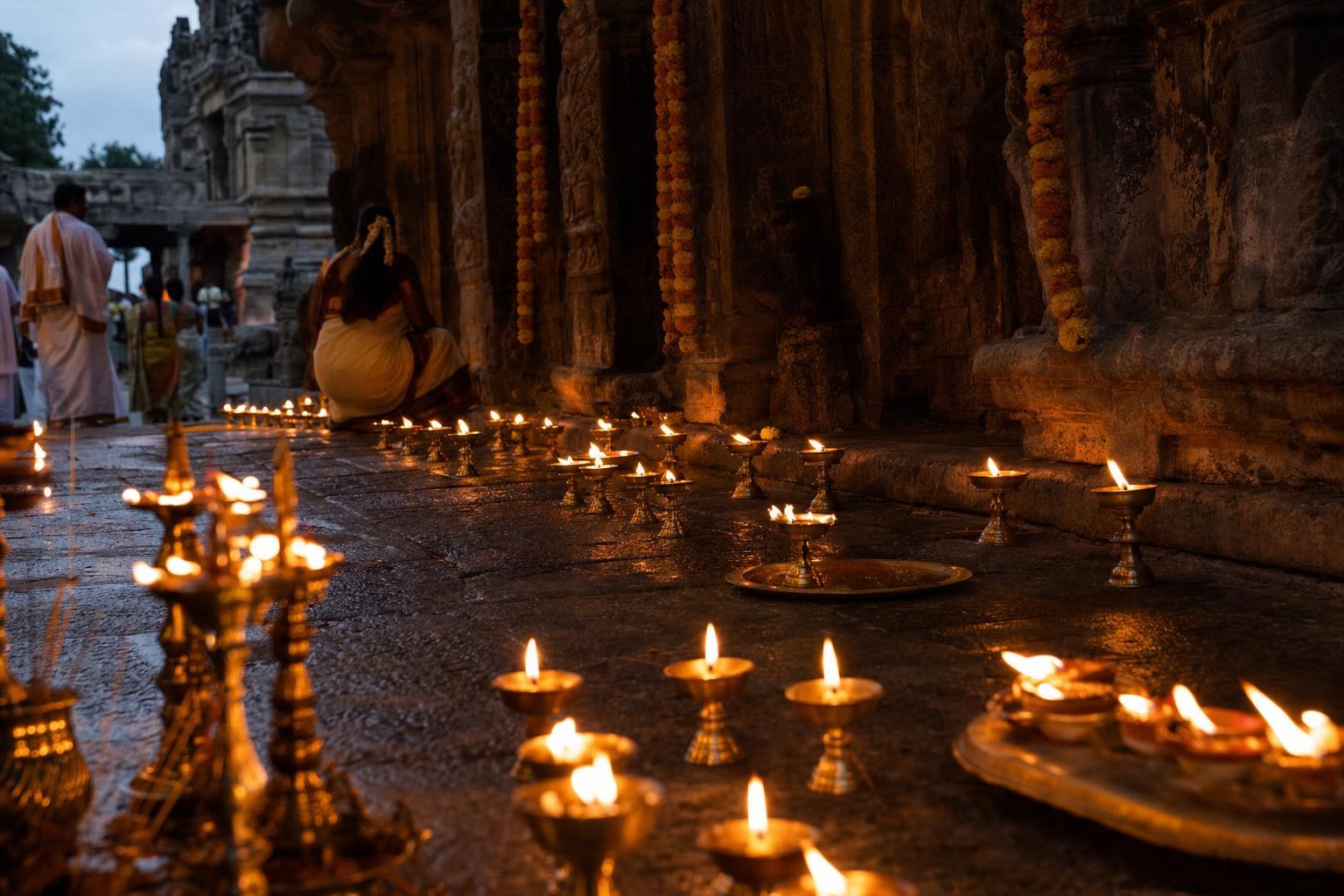
Rows of lit brass oil lamps on the stone floor of an old carved temple hall.

The crafts grew up beside the practice

India has woven fine cloth, cut stone and distilled flower oils for longer than almost anywhere else. The stone cutters of Gujarat have shaped agate for more than four thousand years, and the distillers of Kannauj still work with copper stills over a wood fire.

For centuries these makers have made the seat, the lamp and the offering for temples and for homes. They know what the objects are for, and that care is the quality you pay for.

Stage 1 of 4

Sourcing

We travel to each place and meet the people we buy from. We choose each source for the quality of what it produces, and we go back to the same people every season.

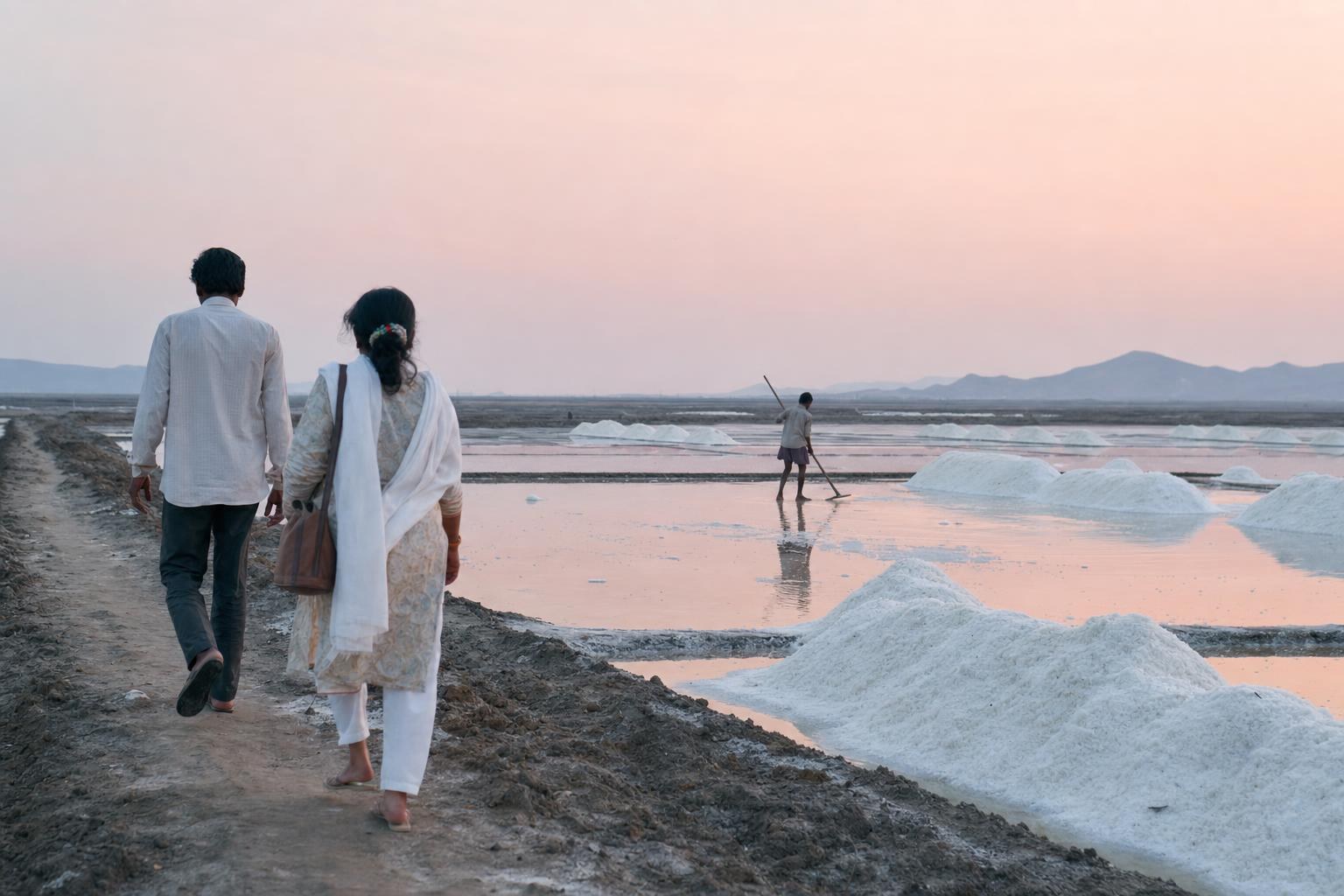
A man and a woman walk along a salt pan at dawn towards a worker raking salt into white heaps.
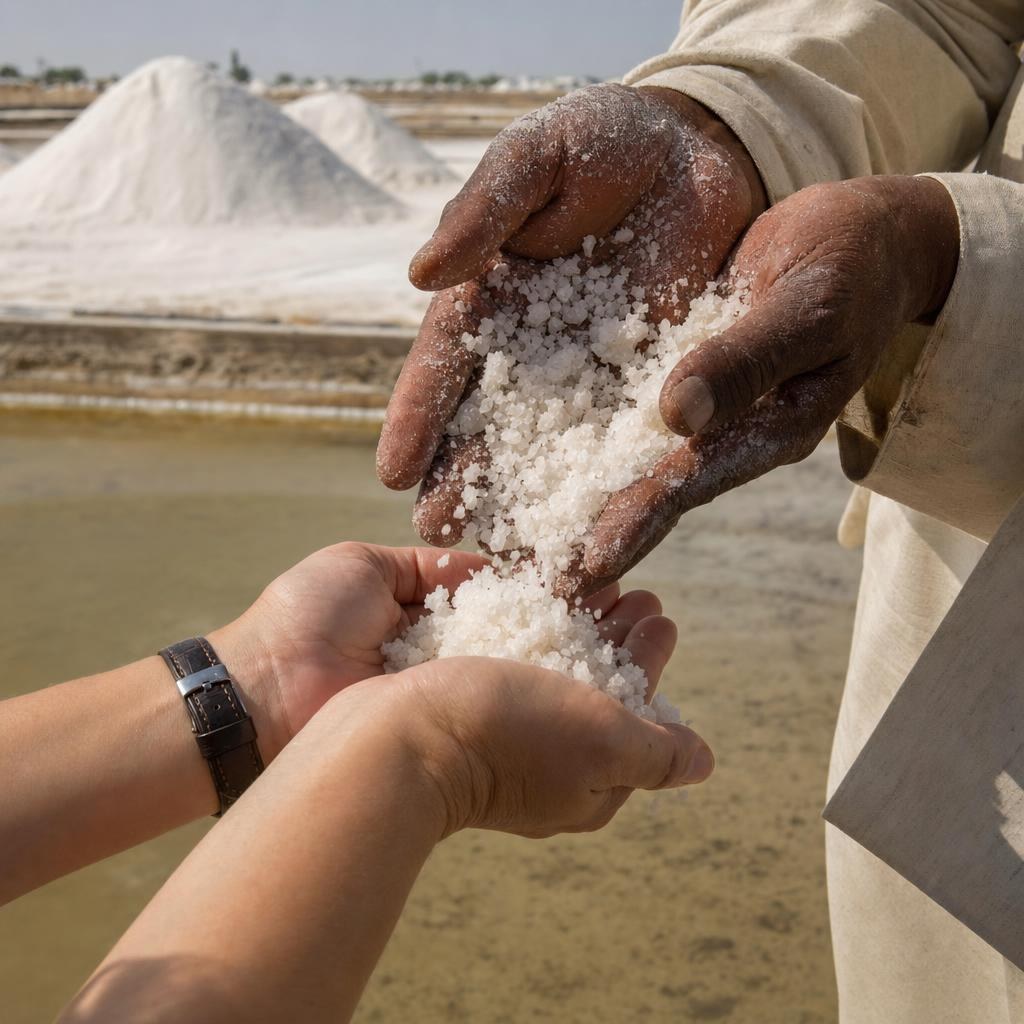
A salt worker pours coarse white salt into a visitor's cupped hands.

We visit the salt pans at first light, when the day's raking begins.

Salt from the lake

Sambhar Lake, Rajasthan

Sambhar is India's largest inland salt lake, and people have raked salt from it since Mughal times. The salt in your jar is white lake salt, dried in the sun on the pans.

We walk the pans with the people who rake them, and we buy only the finest grade the lake produces. These are the whitest and cleanest crystals, washed and sorted by hand. Most pink salt sold as Himalayan is mined in Pakistan, which is why we do not use it.
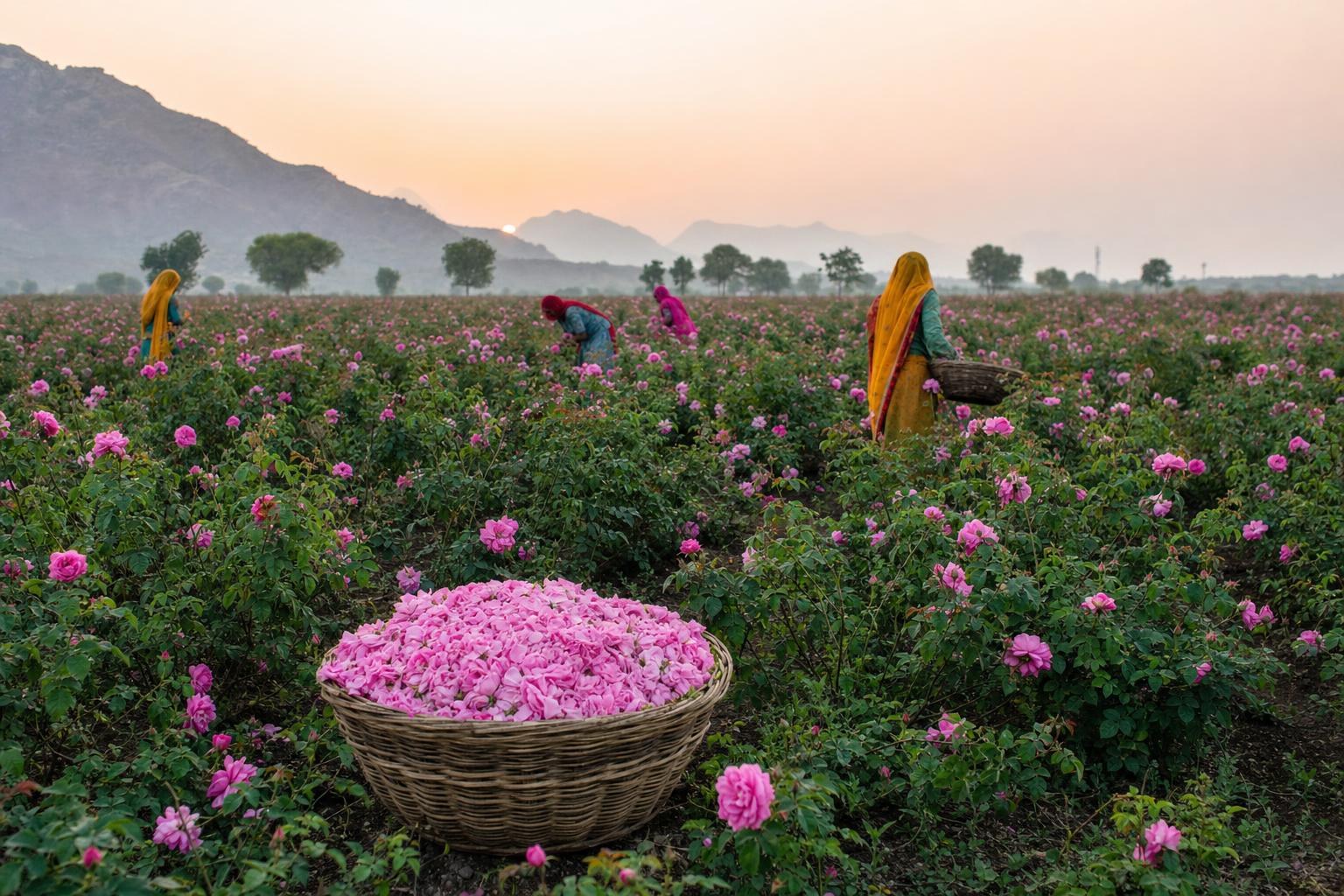
A field of pink roses at dawn, with pickers in bright saris in the distance and a full basket in front.
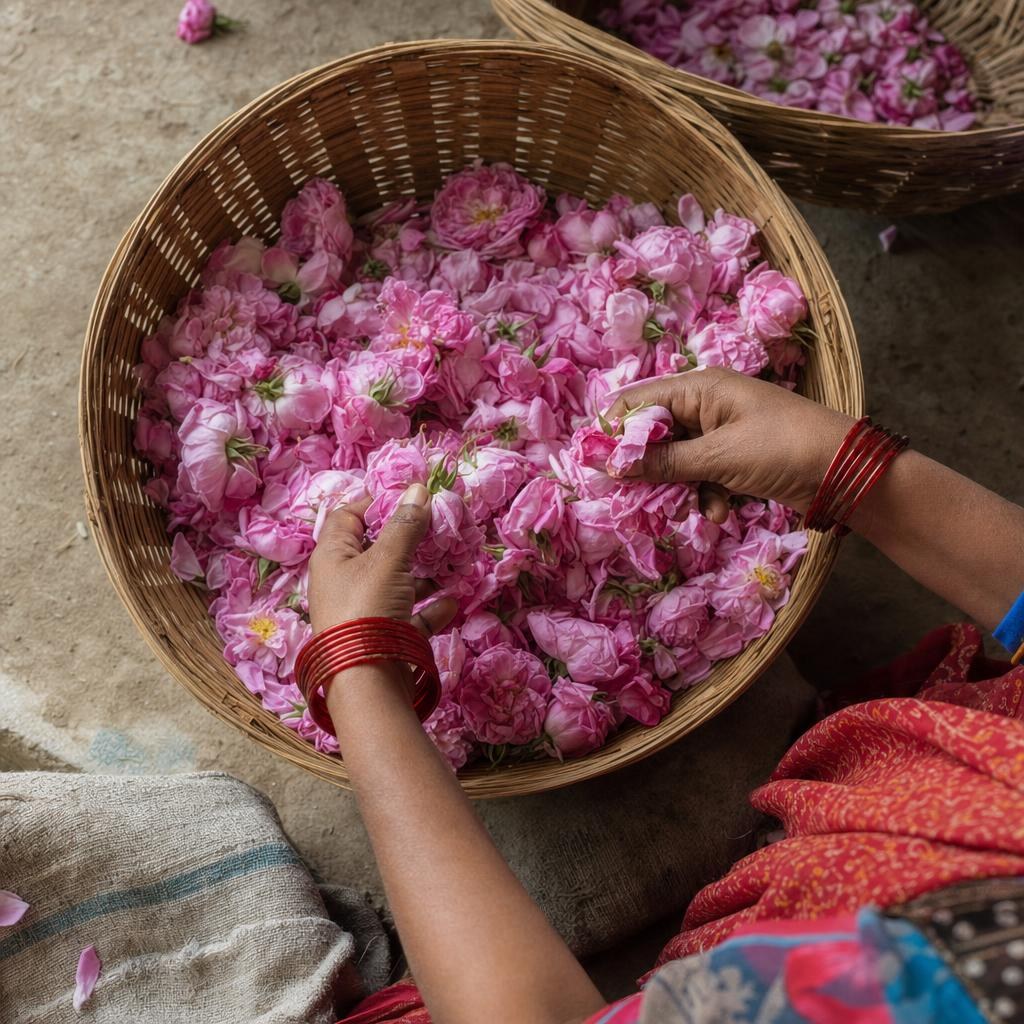
Hands sort fresh pink rose heads in a wide cane basket.

The roses are sorted by hand on the morning they are picked.

Roses picked at dawn

Pushkar, Rajasthan

Pushkar is known for its damask roses. The pickers work at dawn, before the sun warms the flowers, and the petals for our salts are dried in the shade.

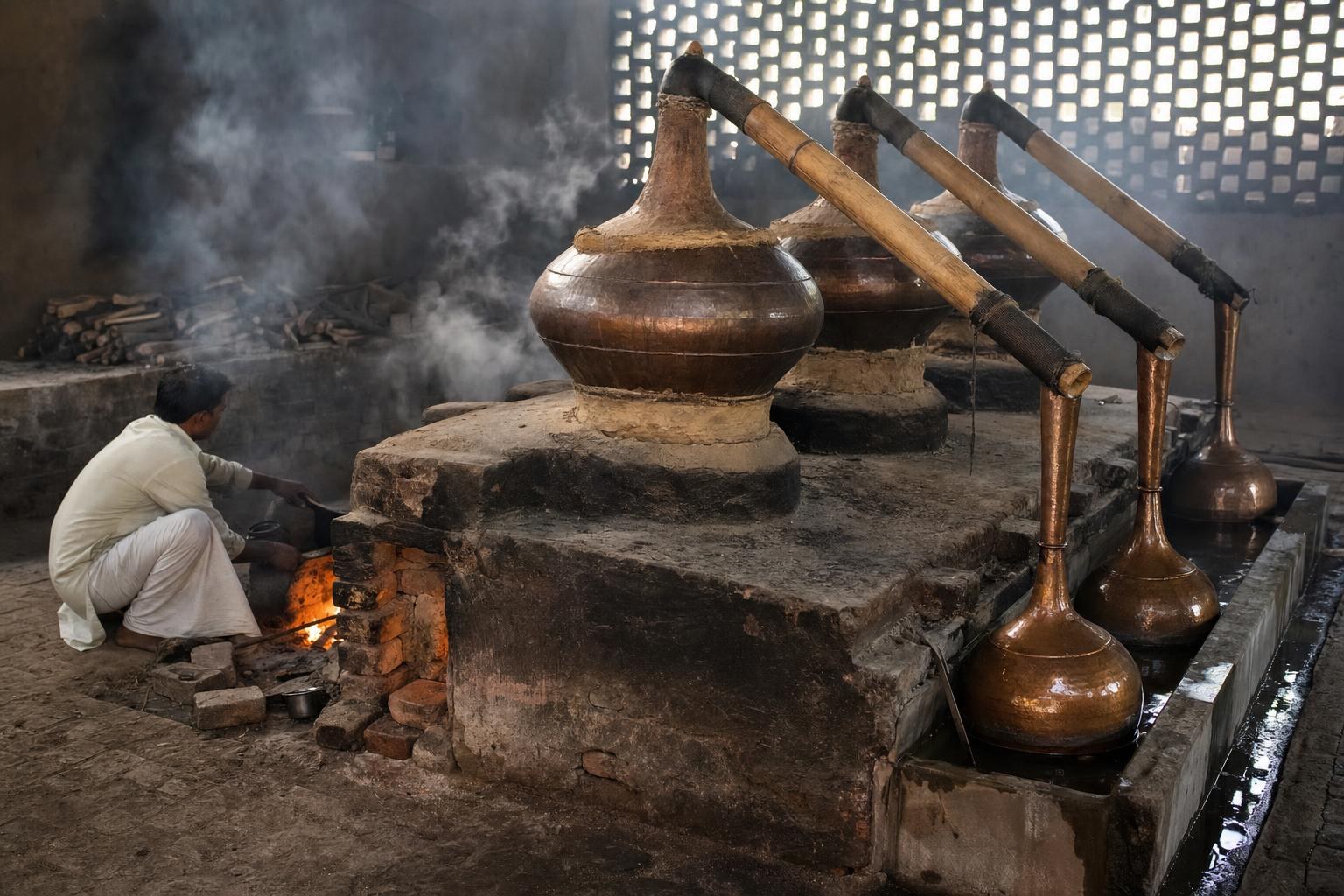
Hammered copper pots on a brick hearth, joined by bamboo pipes, with a distiller tending the fire.

The copper pot is called a deg and the receiver is called a bhapka.

Rose oil from copper stills

Kannauj, Uttar Pradesh

Kannauj has distilled flower oils for centuries, and its perfume holds a protected origin mark. The distillers seal the petals in a copper pot over a wood fire and collect the oil through a bamboo pipe.

A few drops of this rose oil go into each batch of our bath salts.

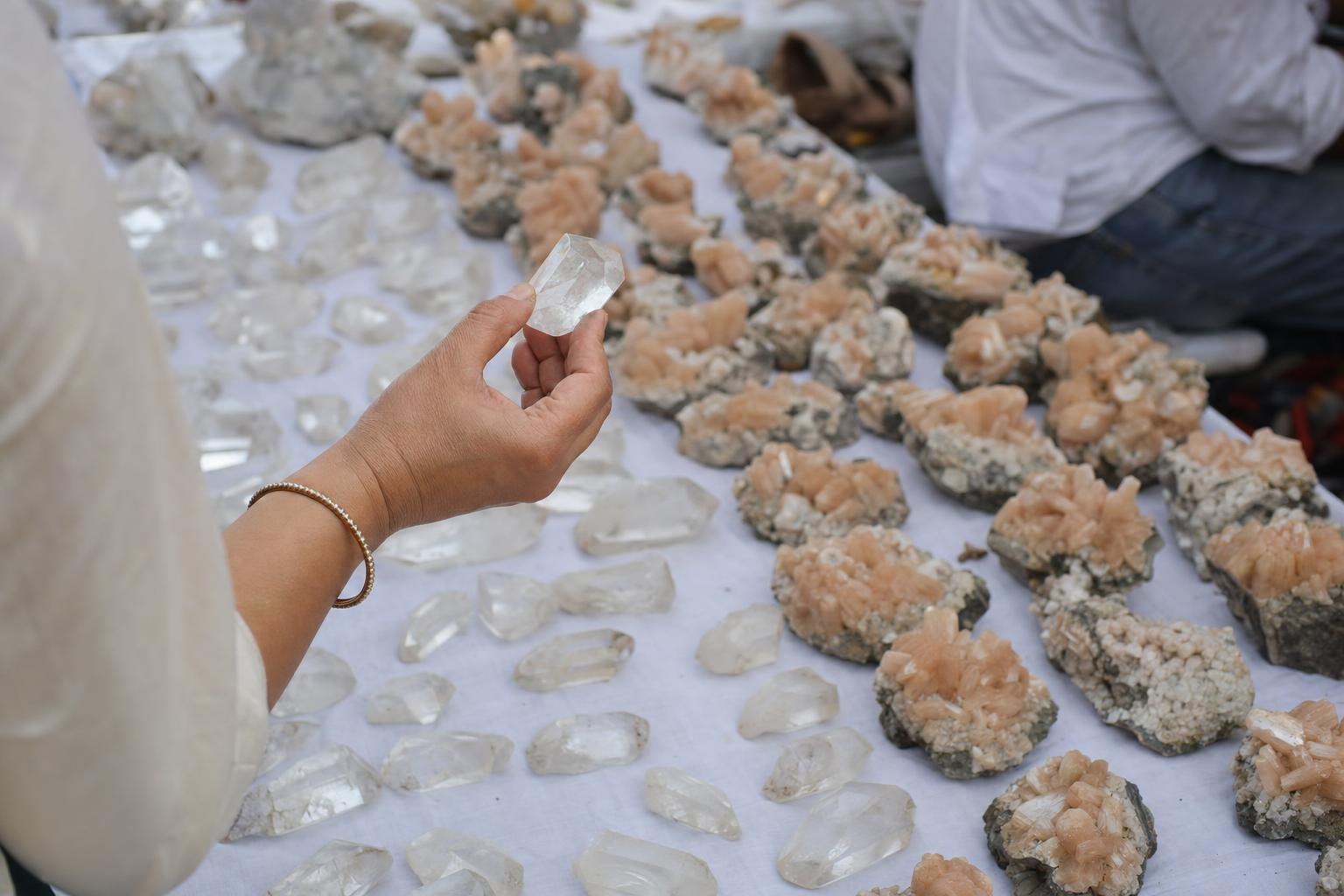
A hand lifts a clear crystal to the window light above rows of raw crystals on white cloth.

We hold each crystal to the light and set aside any that are cracked or crumbling.

Crystals from the Deccan

Maharashtra

Apophyllite and stilbite form in the old basalt of the Deccan, in western India. We choose every crystal in person, one at a time, from dealers who can tell us which quarry it came from.

Many popular crystals are not Indian. Our set is chosen only from stones that are.

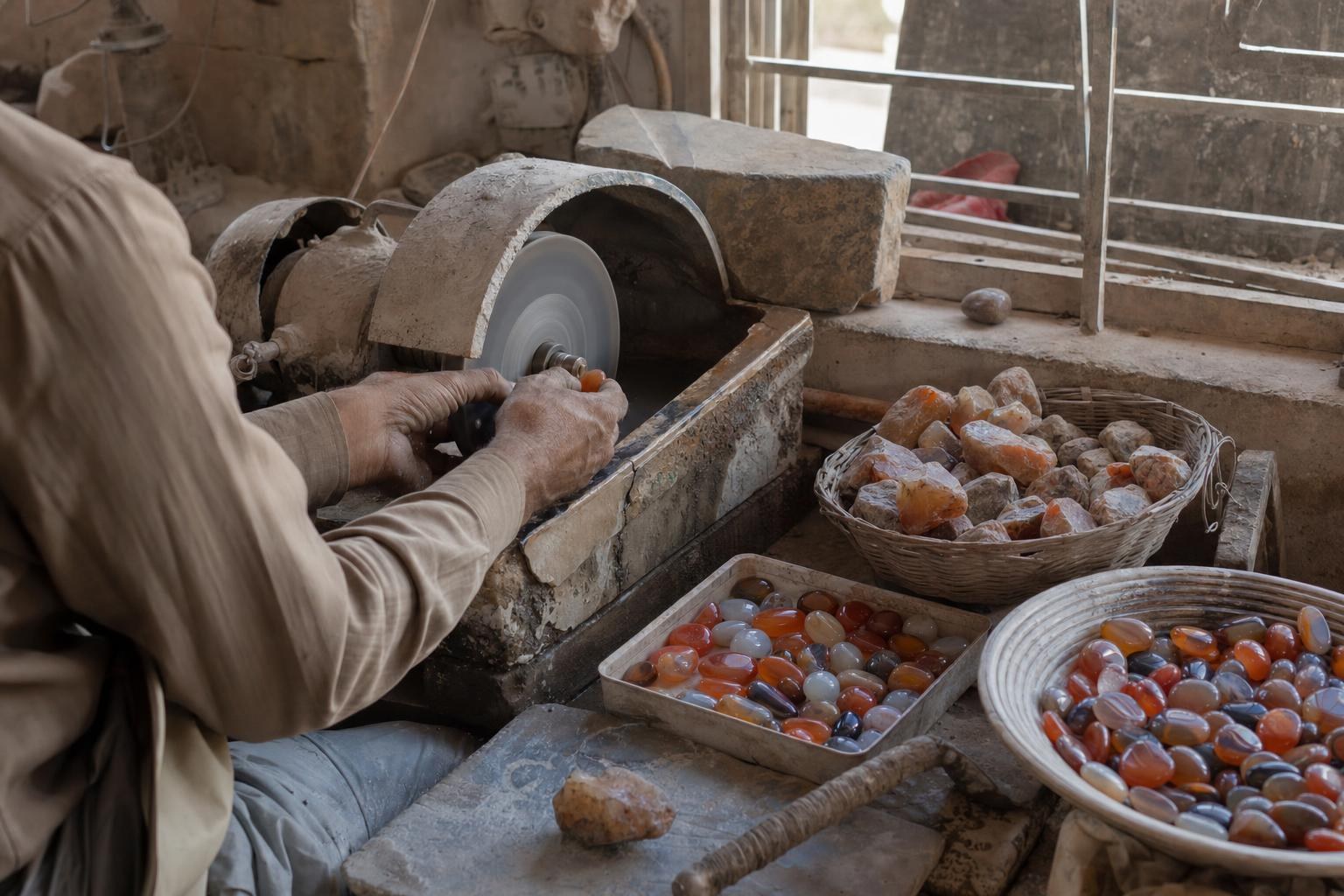
An artisan's hands shape a piece of orange carnelian against a grinding wheel, with baskets of rough stones beside him.

A cutter shapes carnelian on the wheel.

Agate and the wand

Khambhat, Gujarat

The stone cutters of Khambhat have shaped agate and carnelian by hand for generations. They shape the carnelian and agate in your kit, and they cut and polish the crystal wand.

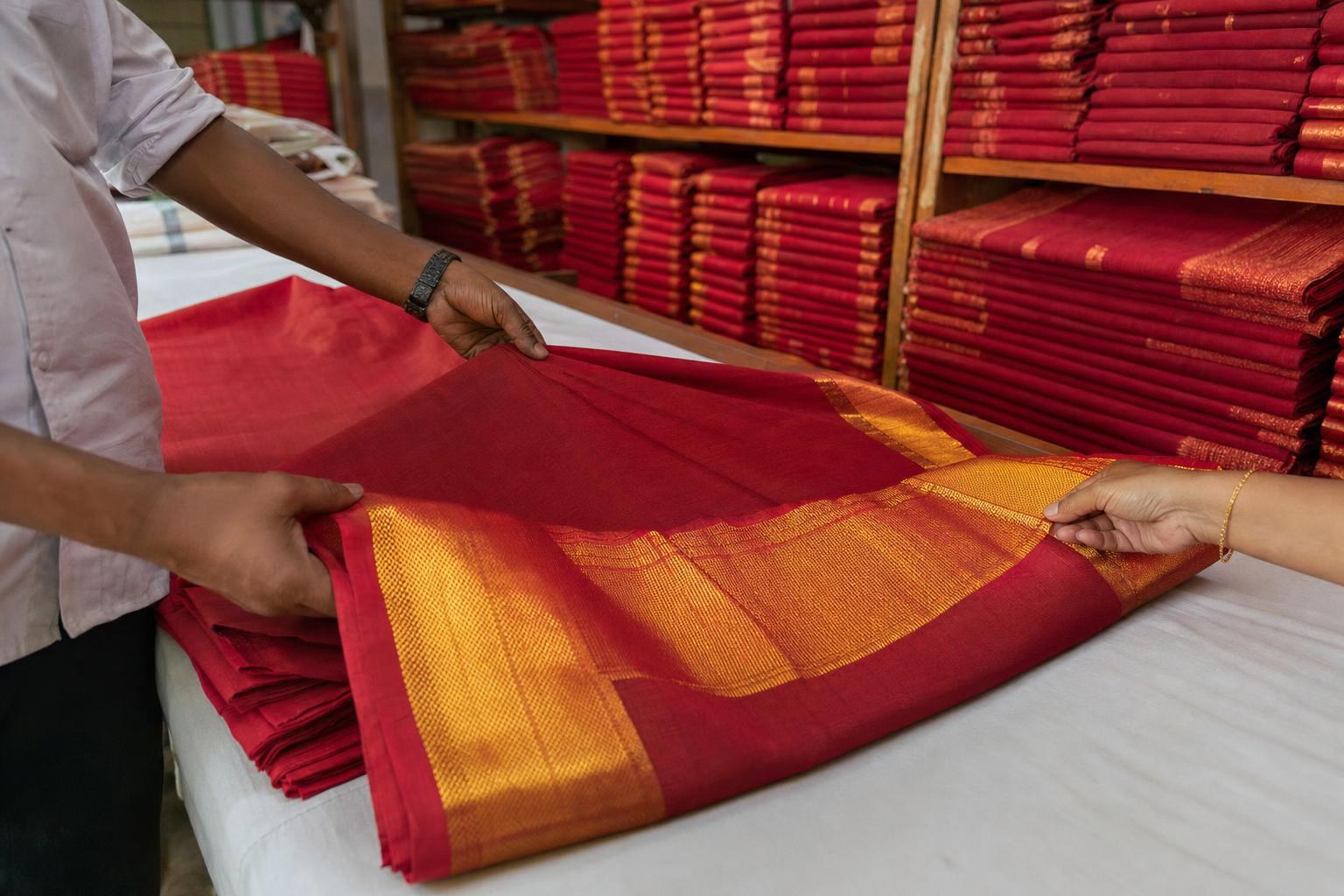
A weaver unrolls red cloth with a gold border across a counter while a customer feels the border.

The gold thread is called zari, and Indian weavers have worked it into cloth for centuries.

Red cloth with a gold border

Handloom weavers, India

The sitting mat is red and gold because the mat our founder practises on is red and gold. We buy the cloth by the bolt from weavers, and we check the gold border by hand before we cut it.

Stage 2 of 4

Making

The sitting mat is tailored in our own workshop, where we oversee every stitch. The bath salts are blended by hand, in small batches, to our own recipe.

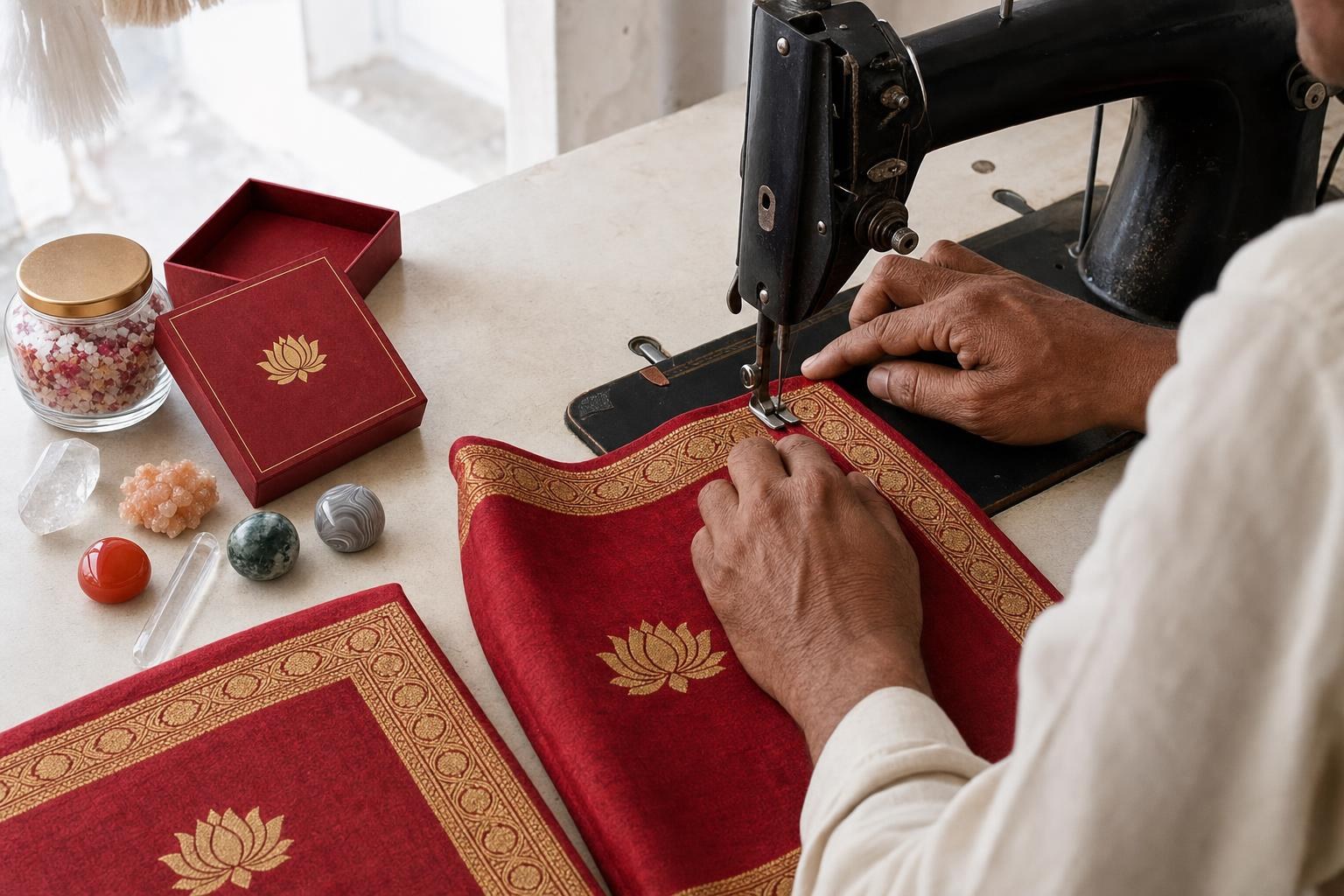
A tailor's hands guide red cloth with a gold border under the needle of a sewing machine.
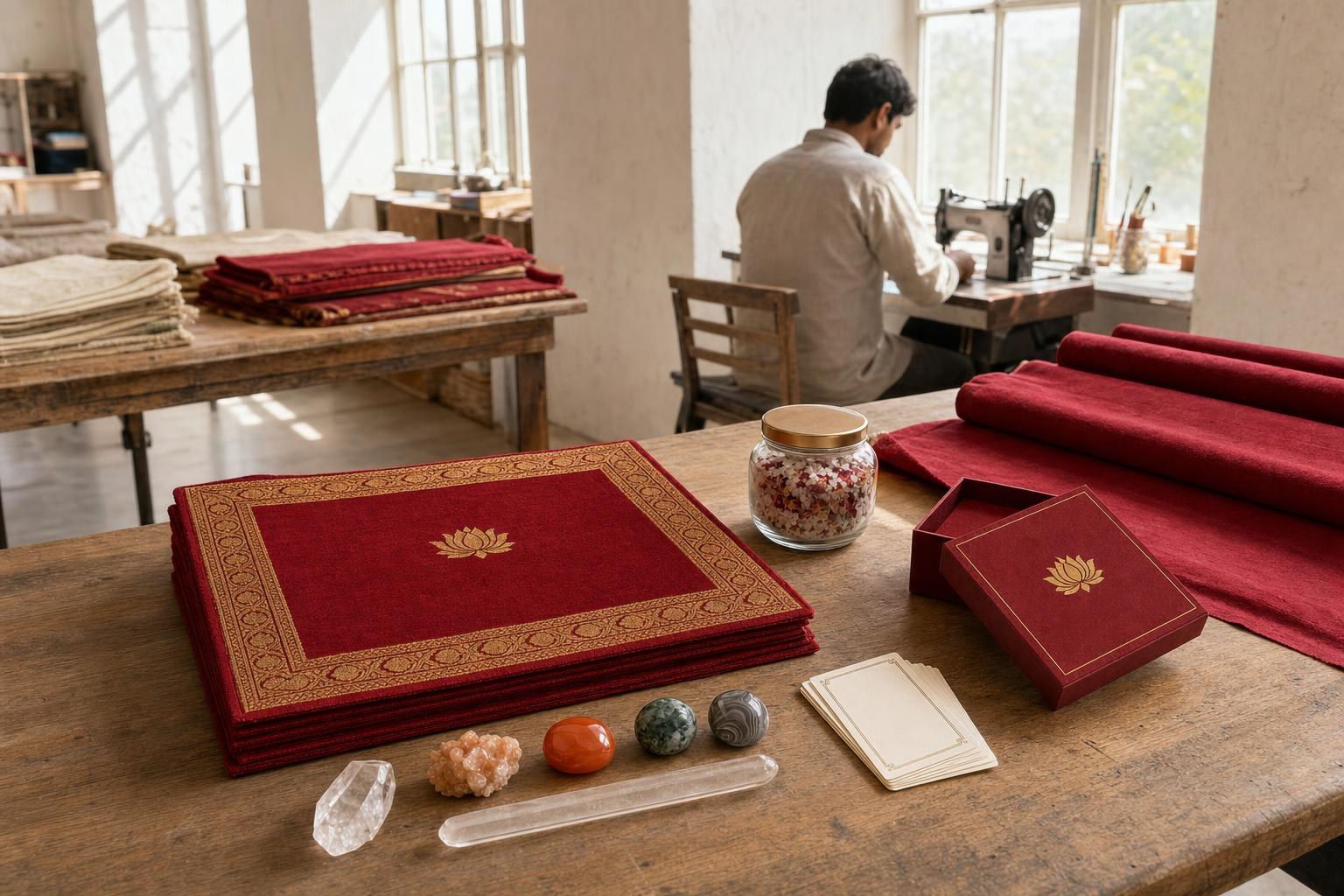
A sunlit whitewashed workshop with a stack of red and gold mats on a long table and a tailor at a sewing machine.

Our tailors finish each mat by hand at the machine.

Tailored in our own workshop

Our workshop, India

Every sitting mat is tailored in our own workshop in India, by tailors we have chosen for the quality of their hands. Each mat is cut, lined and finished by one tailor from the first cut to the last stitch, in the way a bespoke garment is made.

We preside over the work ourselves. We inspect every mat for the line of its border, the turn of its corners and the evenness of its stitching, and only the mats that meet our standard go into a kit.

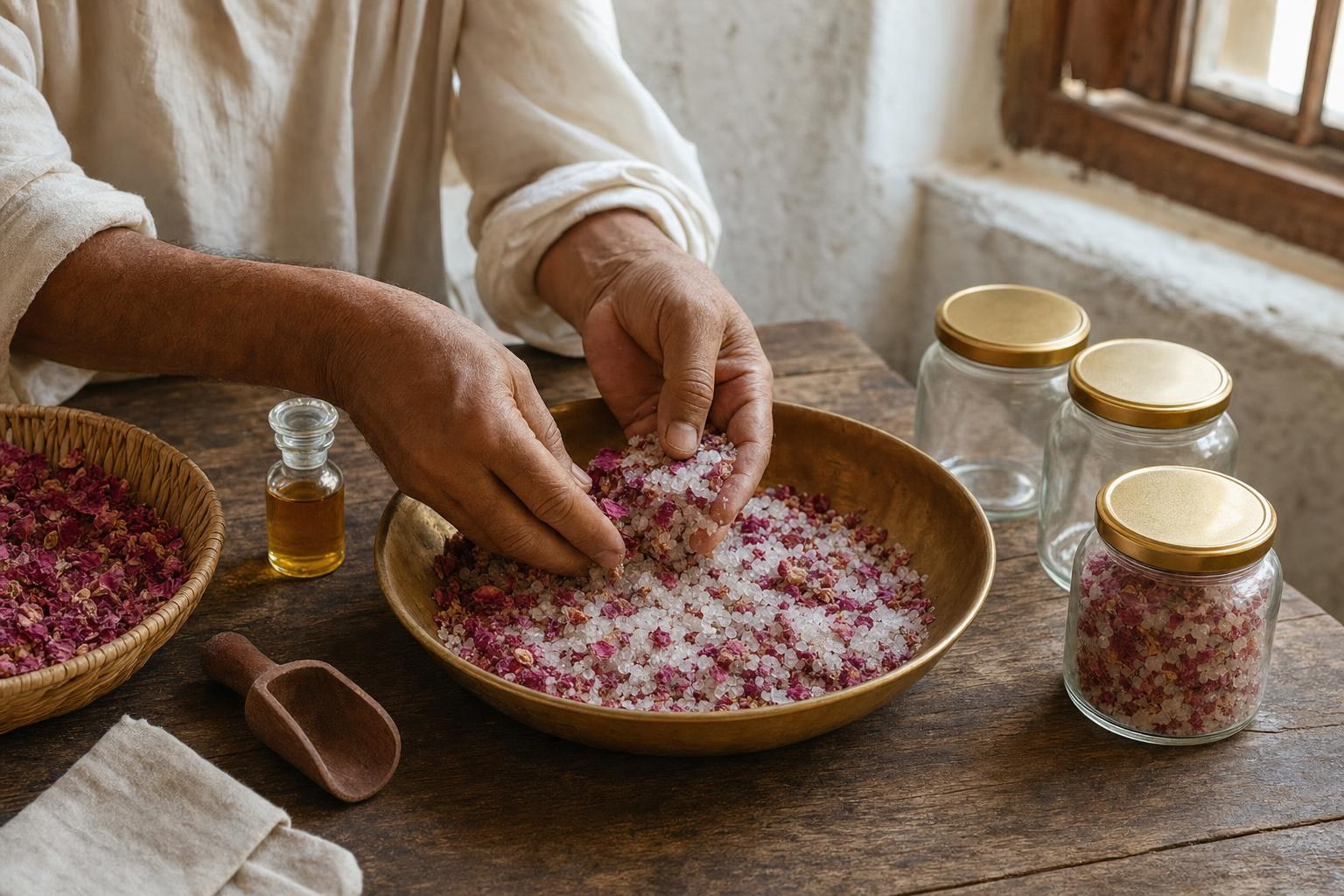
A maker's hands fold rose petals into salt in a brass bowl on a wooden table, beside jars and a basket of petals.

Rose petals are folded into the salt by hand, one small batch at a time.

The salts are blended by hand

A master blender, India

Our bath salts are blended in small batches by a maker who has spent a working life with flowers and oils. The salt is sifted by hand, and the rose petals are folded through it a handful at a time so that they stay whole.

The rose oil goes in last, drop by drop, and the blend is left to rest so that the scent settles into every crystal. Each jar is then filled, weighed and sealed by hand.

It is slow work, and it is the reason the jar smells of roses when you open it and not of perfume.

Stage 3 of 4

Consecration

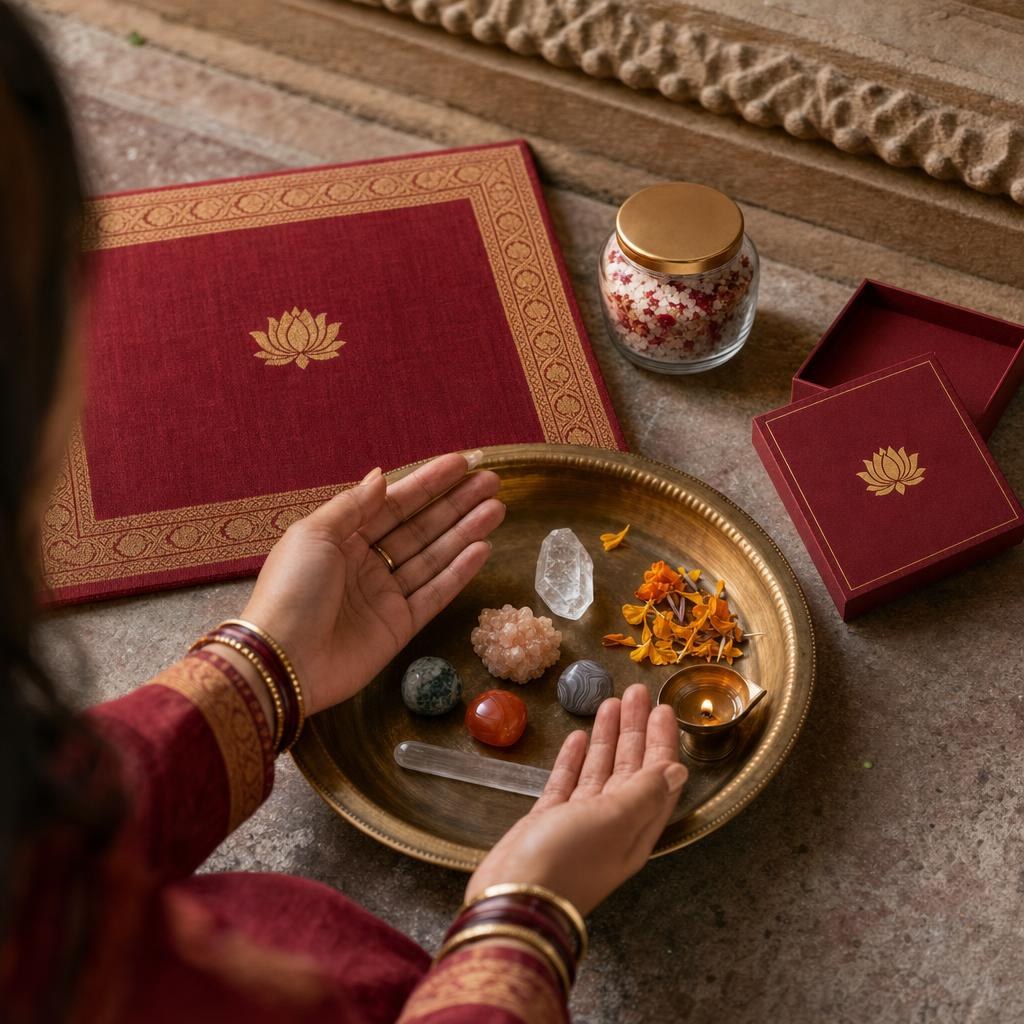
To consecrate something is to dedicate it to a purpose. In India the objects used in a practice have long been prepared in this way before they are used. Our founder hand selects and consecrates every crystal we sell.

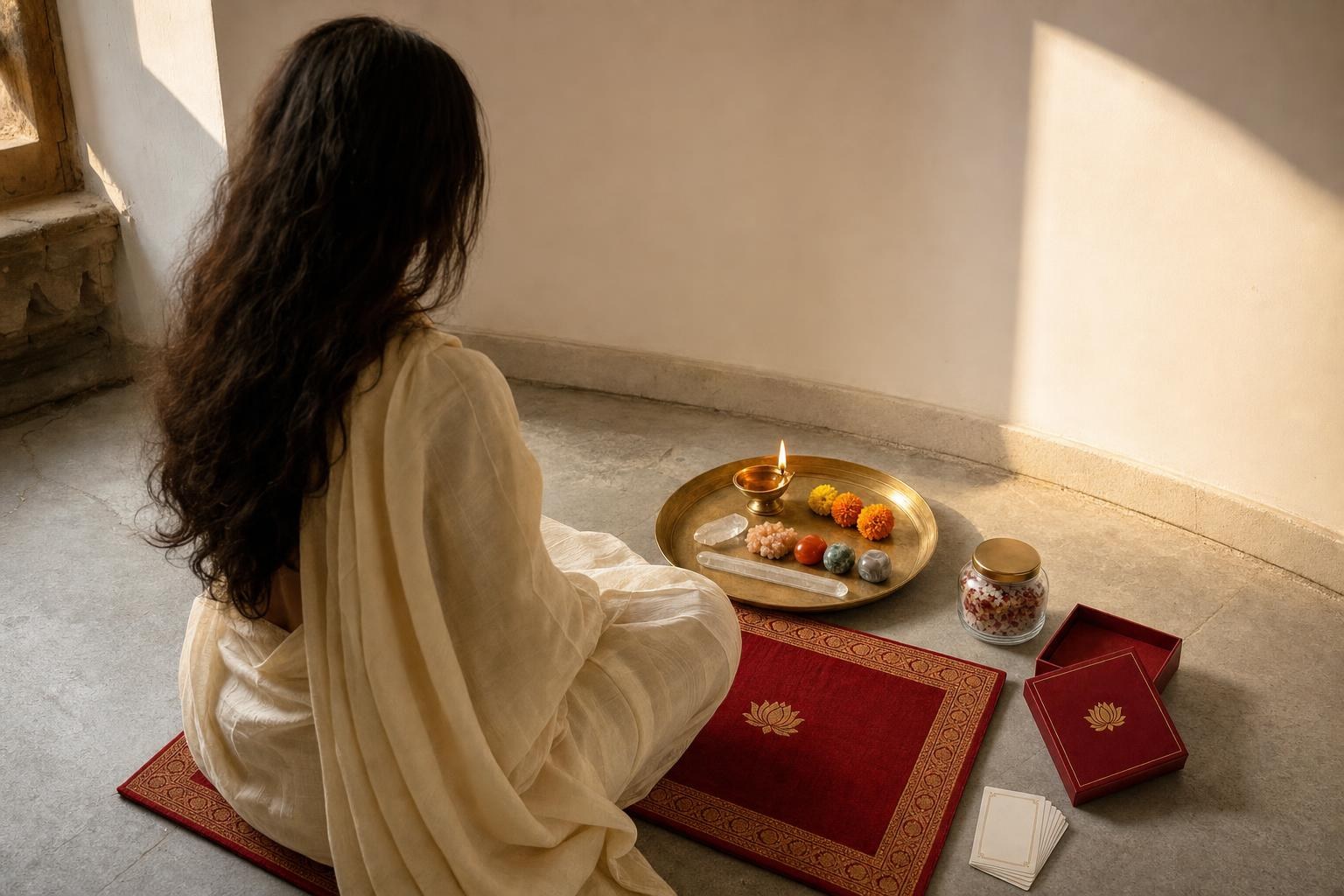
A woman in a cream sari sits on the red mat before a brass tray of crystals and a lit oil lamp, seen from behind.
Two hands held open above a brass tray of crystals beside a lit oil lamp.

Selected by hand, then consecrated

In India, one dated batch at a time

Our founder inspects every crystal in person. She keeps the ones with good clarity, form and finish, and she returns any that are cracked, dull or crumbling.

She then consecrates each batch herself, in the tradition she practises, and records the date. The origin record in your box carries that date.

She does this in person, so each batch is small. When a batch has gone, the next one carries a new date.

Consecration is an act of dedication. We tell you who performed it and when, and we leave the experience of it to you.

Stage 4 of 4

Packing

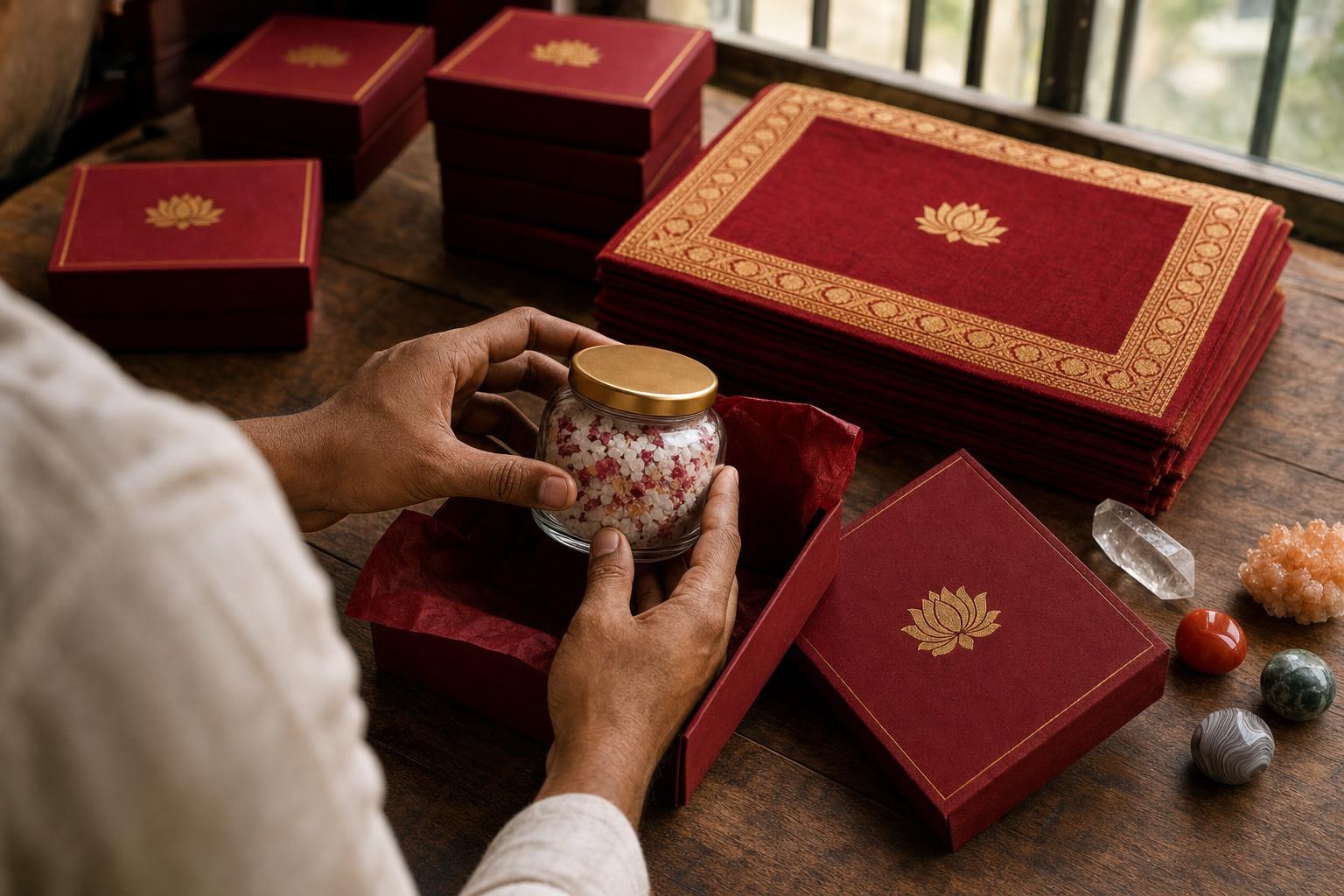
We pack every kit by hand in the same workshop where the mats are sewn. Each piece is checked once more before it goes into the box.

Two hands lower a jar of bath salts into a red box lined with tissue, with closed boxes and folded mats behind.

A box that you keep

Our workshop, India

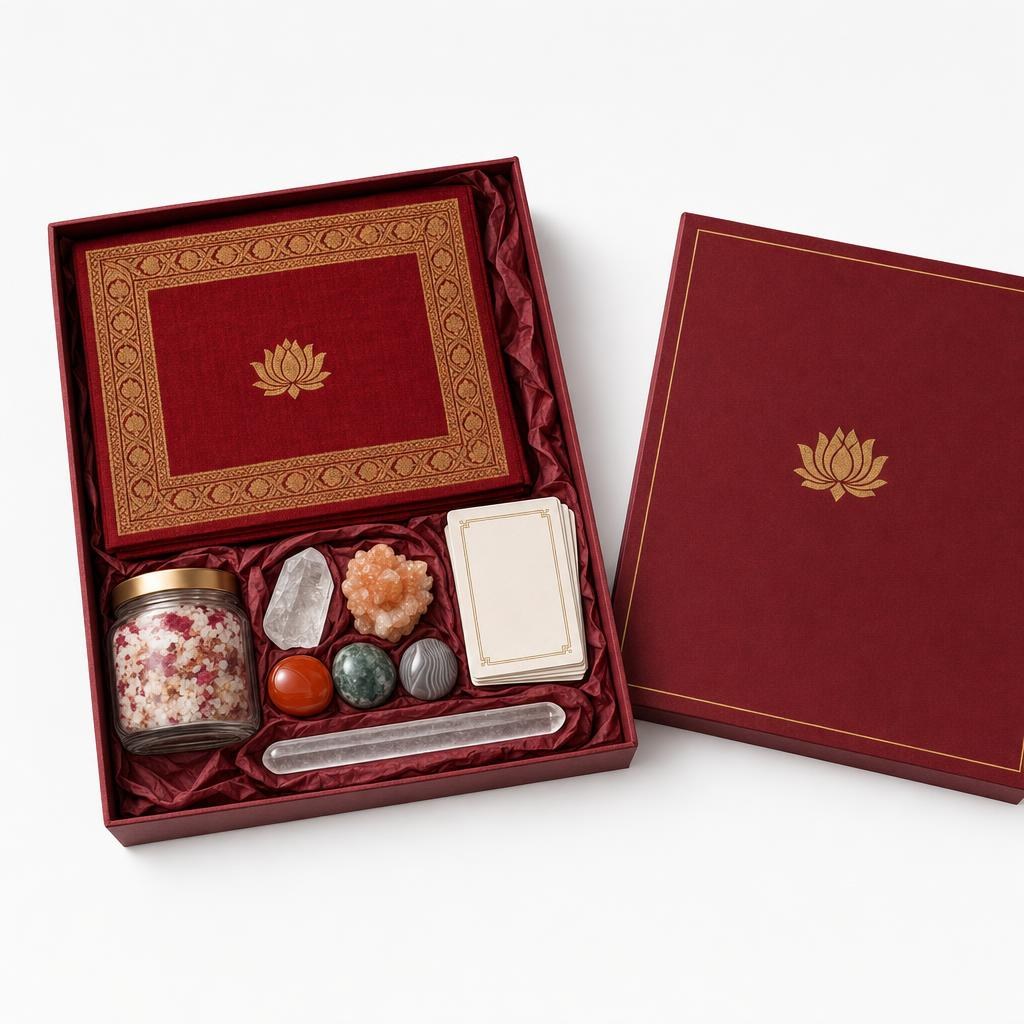
The box is rigid board in deep red with a gold line, and it is made in India. Each piece is wrapped in tissue and has its own place, so the kit goes back into the box after every session.

We drop-test a packed box before a batch ships, so the glass jar arrives whole.

The Full Kit packed inside its red box, each piece wrapped in red tissue.
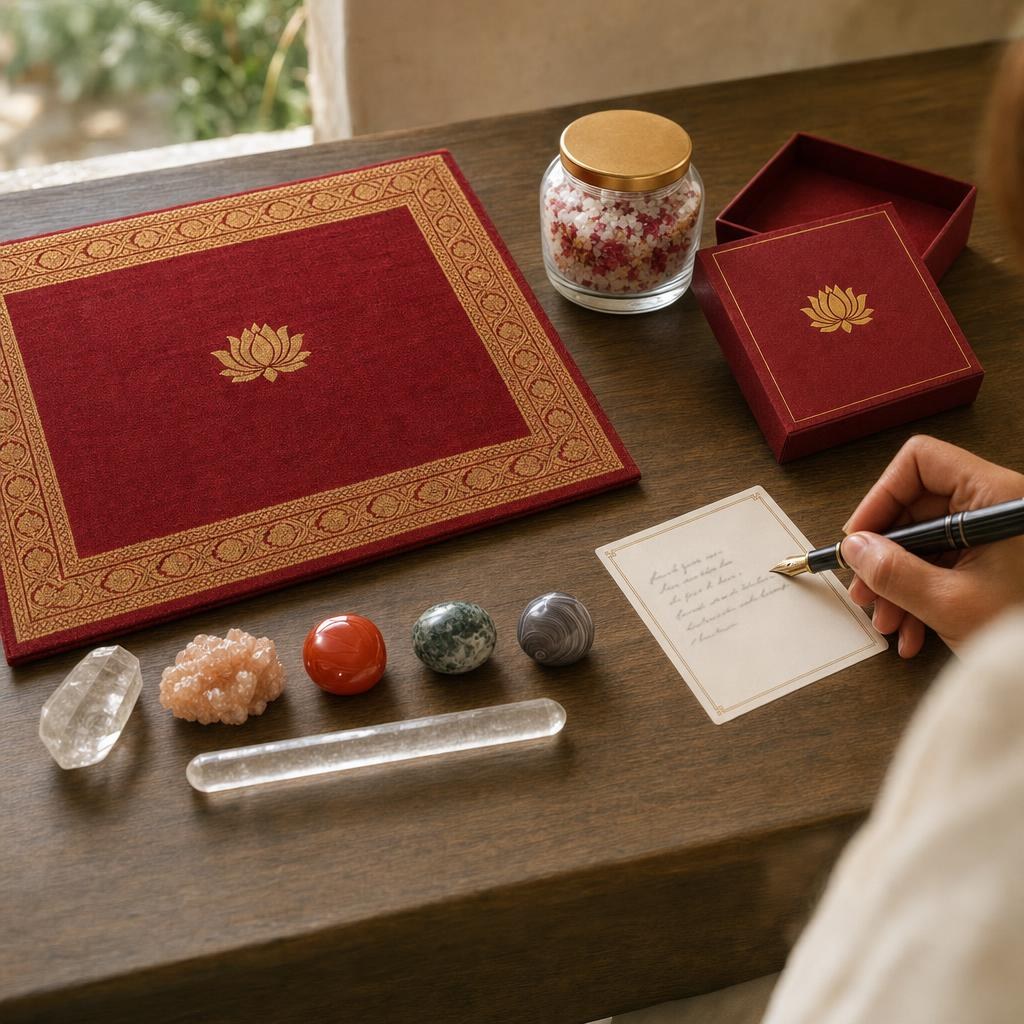
A hand writes a date with a fountain pen on a gold-edged card beside the red box.

The origin record

Written and dated for each batch

The last thing into the box is the origin record. It is a card that lists where each material came from, who made each piece, and the date the crystals were consecrated.

The code card for the ataala app sits under it.

Why an AtaalaPrana kit is worth its price

You could buy a mat, a jar of salts and a few crystals for less. These are the things you would be giving up.